Shropshire Horticulture News
Please let me know of your news. Anything to do with Growers. Events, Restaurants and Enterprises or just plain Horticulture News.
email me


As it will be shortly Remembrance Day i will draw to the attention of Shropshire Horticulturalists the Horticultural symbols of the dead and injured in past conflicts.
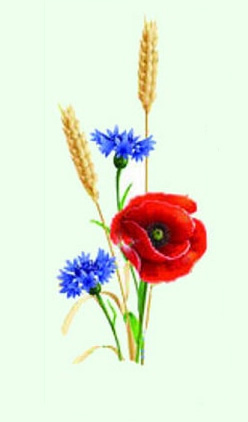
Above is an image of a Poppy, Cornflower and an ear of Corn.
1 I will start with the ear of Corn (Wheat) which symbolises the fields which the soldiers of the 1st World War. As far as i know it is not used as a symbol of remembrance in any War context anywhere in the World.
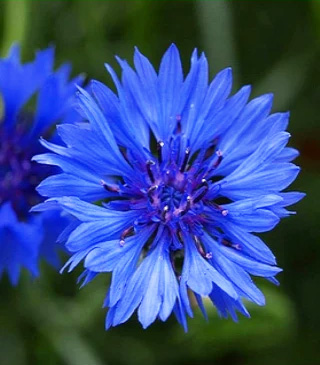
2 The Cornflower which very few people realise is the symbol of the Remembrance in France.
Like the poppy, the cornflower (Centeaurea cyanus) continued to grow in land devastated by shelling, providing the only signs of life and colour on the battered landscape.
In the language of flowers, bleuets symbolised delicacy and purity, and “Les Bleuets” became a reference to France’s young conscripted soldiers who arrived on the front line in 1915 wearing the bleu horizon uniform.
When war broke out, France needed about 17 million metres of new cloth, so it made soldiers’ uniforms with what was available and imported material from Britain, Spain and the United States. The light blue/grey melded well with the chalky mud of Champagne and Artois.
The term bleu became so popular that the image was used in postcards, poems and songs, including “Bleuets de France” (1916) by Alphonse Bourgoin:
These here, these little “Bleuets”
These Bleuets colour of the sky
Are beautiful, gay, stylish
Because they are not afraid.
Merrily, go forward
Go on, my friends, so long!
Good luck for you, little “blues”
Little “bleuets”, you are our hope!
Bleuet remembrance badges were sold from 1916 after they were created by widowed nurse Suzanne Lenhardt, at Les Invalides, and Charlotte Malleterre, whose brother and husband were generals.
The women organised Le Bleuet de France workshops so injured servicemen could make cornflowers from tissue paper and sell them for income.
The bleuet became a symbol of rehabilitation through labour and its sales grew after the French President Gaston Dourmergue endorsed the initiative.
Today, bleuets are worn on the lapels of service men and women at remembrance events.
They are not as commonplace as poppies but they are still synonymous with the loss of life in war and the solidarity of veterans.
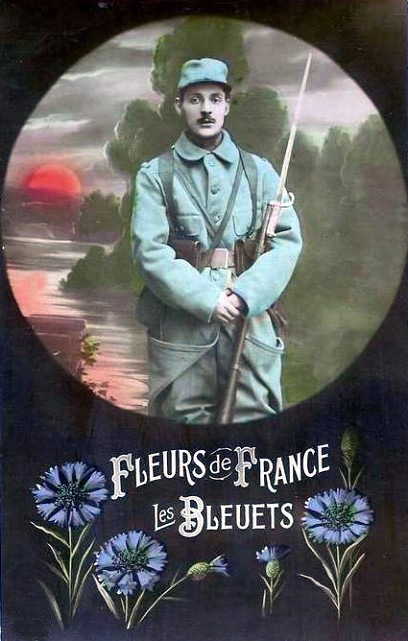
Thanks to the The Sir John Monash Centre Australian Memorial for the above (click)
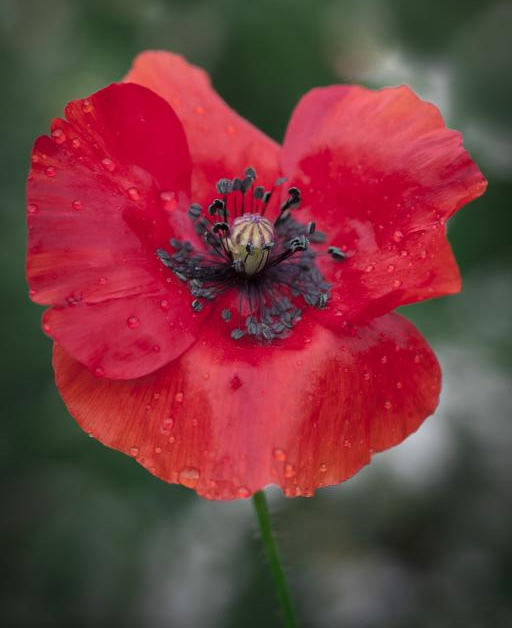
3 The Poppy (Papaver rhoeas)
There’s a terrible truth behind historic images of pretty red poppies dancing in the battlefields of World War I.
If not for the nitrogen in the bombs that tore up the landscape, and in the blood of slain soldiers, they would never have bloomed in such numbers and become an enduring symbol of remembrance
Griffith University Professor Catherine Pickering is a botanist who spends much of her time lecturing students about the physiology of plants, but also about how they are valued by society.
In the case of the red poppy, its war-time symbolism is a long and fascinating intersection of biology and history ignited by the heart-wrenching 1915 poem, In Flanders Fields.
It was penned by Canadian officer and surgeon Lieutenant-Colonel John McCrae, who had not long beforehand officiated at the battlefield funeral of his good friend Alexis Helmer, who was killed by a shell near Ypres in Belgium.
In Flanders Fields
By John McCrae
In Flanders fields the poppies blow
Between the crosses, row on row,
That mark our place; and in the sky
The larks, still bravely singing, fly
Scarce heard amid the guns below.
We are the Dead. Short days ago
We lived, felt dawn, saw sunset glow,
Loved and were loved, and now we lie,
In Flanders fields.
Take up our quarrel with the foe:
To you from failing hands we throw
The torch; be yours to hold it high.
If ye break faith with us who die
We shall not sleep, though poppies grow
In Flanders fields.
The blooms he was writing about were the first to flower on the battlefields of Belgium and northern France, where fighting had laid waste to the land.
The devastation created ideal conditions for red poppies, a fast-growing annual species that produces lots of seeds that can lie dormant for about a century.
When disruption arrives, it thrives.
“It was found in the fields of Europe but not in very high densities before the war,” Prof Pickering explains ahead of Anzac Day commemorations.
“But because of the first World War, and the enormous destruction, the loss of vegetation, the digging of trenches, the exploding of bombs, that meant the seed that was in the soil got dug up, exposed to light and then germinated.
“And then the terrible part is that it also benefited from nitrogen. Partly from the exploding ordinance, there’s nitrogen in those, but also the blood-soaked fields.”
When the fighting moved on, and people returned to areas that had seen hellish fighting, they found fields of blooms.
“The bright red was an association of the sacrifice and the blood but they are also very transient. Individual flowers only last a single day, and that’s the idea of young life, cut short.”
The ephemeral nature of the blooms forced people to be creative.
If the real thing couldn’t be had at memorial events – picked blooms will also drop their petals almost immediately – then they would have to be made by hand.
And so they were. At first in France in the early 1920s. From silk.
And now all over Australia, New Zealand, the United Kingdom, and the United States to mark Remembrance Day and Anzac Day.
“The act of making them is also part of that remembrance,” Prof Pickering says, along with the sale of them for the benefit of war veterans, and the families of those who don’t come home.
The above was written in The Canberra Times Australia (click)
4 Another piece of interesting information about the Poppy.
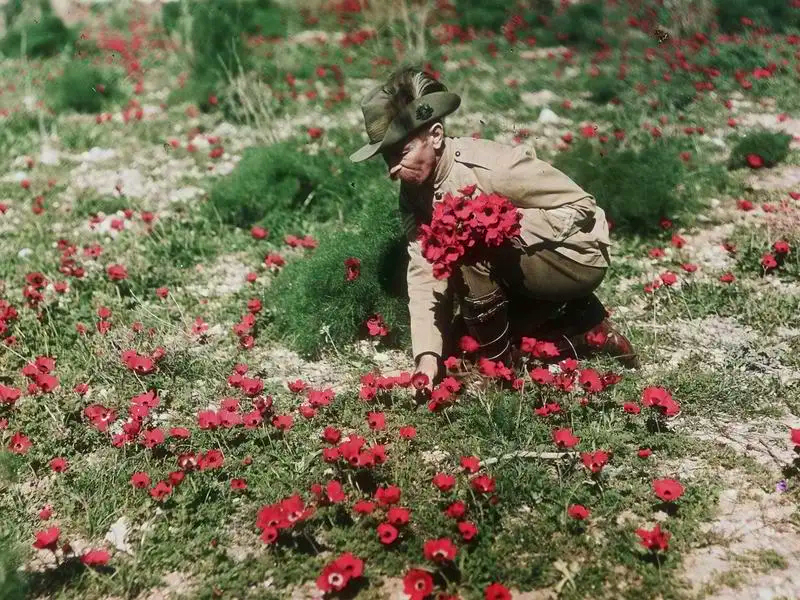
Rare Colour Photograph by Frank Hurley (Endurance fame)
Australian lighthorseman gathering poppies in Palestine, colour photograph (c1918). PO3631.046/Courtesy of the Australian War Memorial
The above photograph is cited as one of the first of Poppies and the 1st Word War. It is not because it actually shows Anemone coronaria which is also known as the Palestinian Poppy
If you wish to buy true Papaver rhoeas then a nursery supplying is Chiltern Seeds

READ OLD NEWSLETTERS HERE OR READ THE MOST UP TO DATE NEWS BELOW


Narcissus Telamonius Plenus
Found by Vincent Sion in 1620 hence the other name Narcissus Van Sion
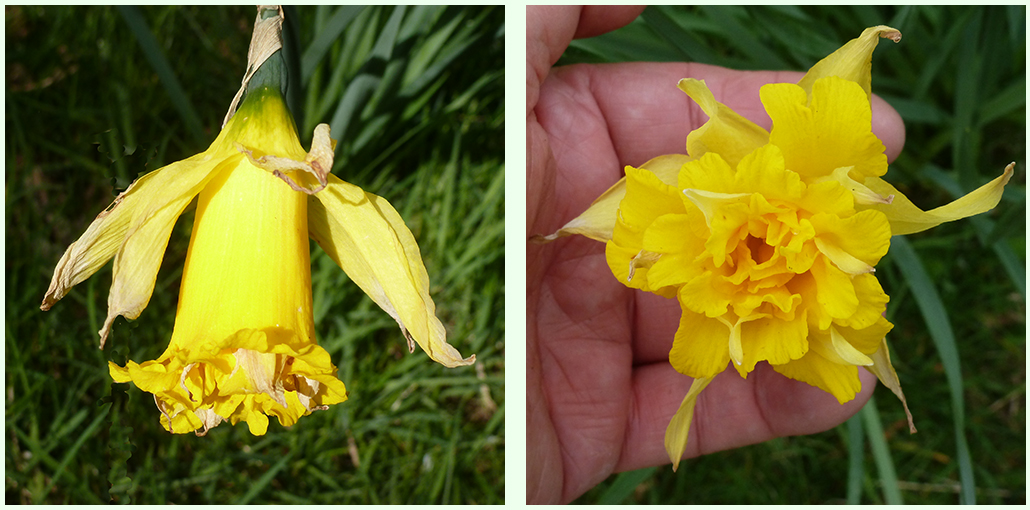
Picture David Darrell 2025 Paddock Stiperstones planted by my great grandmother Ann Evans (Pugh)
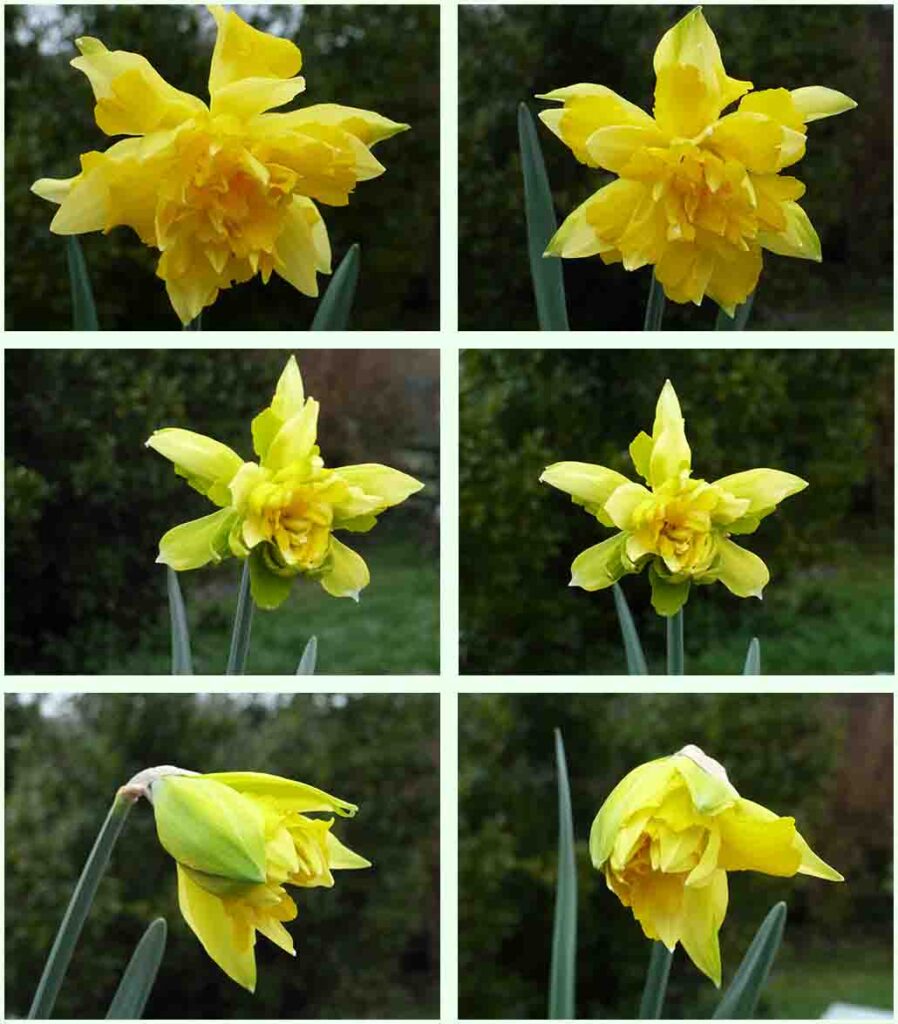
Further photographs 2026 showing the variation in the flowers
Link to further RHS notes

On Friday on a visit to Lydham Farmers Market i met Mick Duffill from Norton near Presteign who brought to my attention the Presteign Daffodil.
He told me that the area around Presteign was noted for Daffodils from Victorian times until the closure of the Railway Station meant it became too expensive to ship the flowers to London and other markets. Many of the escapees can still be found growing wild in the fields, gardens and hedges in the area.
Notable varieties were Snipe, Felindre, Carbineer and Ludlow White. Most are not available commercially but Snipe, which is one of those which is white, abeit starting with a slightly pink trumpet initially before turning white on maturity is still available in some bulb stockists. This is the one most commonly seen in the wild in the area.
The following is an article from Hortus Spring 2007 witten by Catherine Beale
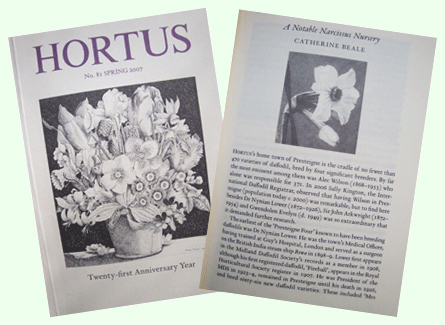
Click above to go to original acticle or read below
Hortus’ home town of Presteigne is the cradle of no fewer than 470 varieties of daffodil, bred by four significant breeders. By far the most eminent among them is Alec Wilson (1868-1953) who alone was responsible for 371 varieties. In 2006 Sally Kington, the International Daffodil Registrar, observed that having Wilson in Presteigne (population today c.2000) was remarkable, but to find here besides Dr Nynian Lower (1872-1926), Sir John Arkwright (1872-1954) and Gwendolen Evelyn (d.1949) was so extraordinary that it demanded further research.
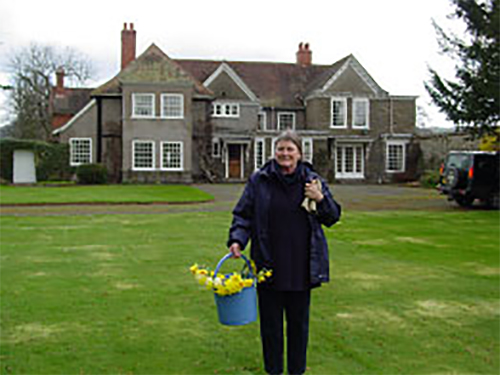
Sally Kington at Middlemoor
The earliest of the ‘Presteigne Four’ known to have been breeding daffodils was Dr Nynian Lower. He was the town’s Medical Officer, having trained at Guy’s Hospital, London and served as a surgeon on the British India steam ship “Rewa” in 1898-9. Lower first appears in the Midland Daffodil Society’s records as a member in 1908, although his first registered daffodil, ‘Fireball’, appears in the Royal Horticultural Society register in 1907. He was President of the MDS in 1923-4, remained in Presteigne until his death in 1926, and bred sixty-six new daffodil varieties. These included ‘Mrs Lower’, ‘Rewa’, ‘Redpole’, ‘Royalist’and ‘Sincerity’ besides ‘Beauty of Radnor’ .
(Presteigne was then the county town of Radnorshire).
Little is known of Lower, although his son recalled picking and bunching daffodils for market at Presteigne, and trips with his father to Sutton Court, Herefordshire, the home of Mrs R O Backhouse, the queen of the pink-cupped varieties. After Lower’s death, his son Peter continued his work at his home (called Presteigne) in Harpenden, Hertfordshire. Peter Lower catalogued thirty-six of his father’s daffodils in 1933, and after moving to Star Cross in Devon in 1946 raised bulbs commercially on several acres of land.
Peter Lower himself was a renowned MDS judge and a vice-President until his death in 1996. The Peter Lower Cup, one of Dr Lower’s solid silver trophies, is still awarded annually in the Affiliated Societies Class for a dozen blooms at the Daffodil Society’s show. Peter Lower was ‘a doyen of the daffodil world’ and among the Society’s longest-serving members.
It was during the First World War, in 1918 that Alexander M Wilson (Alec) moved to Middlemoor, Presteigne from Shovell, Somerset. Wilson and his wife had lost their son in the war, and Wilson’s stock of narcissus bulbs had been destroyed by eelworm, so the move to Presteigne was timely. Wilson recalled as a boy saving pennies to purchase individual bulbs, and thus a remarkable horticultural career began, given further impetus after he damaged his spine in a steeplechasing accident as a youth.
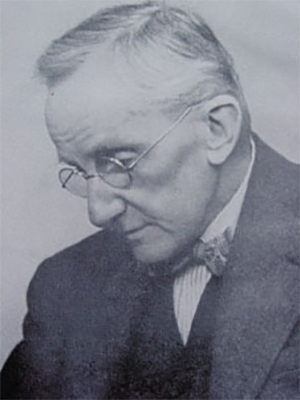
Alec Wilson
Wilson’s contribution to the species is remarkable not only for the number of his varieties: vital too, in the relatively early stages of daffodil breeding, was the almost unparalleled quality of the flowers that he raised. Another leading breeder, Guy Wilson (no relation), writing in 1952 recalled ‘dazzling exhibits of superb quality, set up by him.’ It seems that Wilson benefited from a close working relationship (at times they corresponded daily) with his fellow-breeder and cousin, PD Williams of St Keverne, Cornwall. Guy Wilson wrote that ‘they both had exacting ideas of the standards of quality, habit, and constitution required in a good Daffodil.’
Among the outstanding varieties bred by Wilson was ‘Carbineer’, a Division 2 (Large-cupped) yellow-perianthed (petalled) daffodil with an orange corona (trumpet). This became one of the most widely known daffodils, winning a First Class Certificate in 1938, prized for both showing and breeding. Another memorable contemporary Division 2 introduction was his glorious pure ice white ‘Ludlow’. But Wilson’s work was not restricted to one Division. Indeed it spanned most of the eleven principal daffodil divisions. Among the best known today is ‘Snipe’ a Division 6 (Cyclamineus) daffodil with its characteristic swept-back yellow fading to white perianths, and white corona. To the Trumpet daffodil cultivars (Division 1) he contributed the yellow ‘Borderer’ and white ‘Centaur’, ‘Abigail’and ‘Saint Enodoc’; to Division 3, (Small-cupped daffodils) he added whites ‘Angeline’ and ‘Avalon’, their purity contrasting with ‘Jezebel’ (deep reddish gold, with a shallow corona coloured deep brick red) and the mid-season ‘Mangosteen’ (pure yellow with a deep-bowled and lightly-ribbed orange corona).
Wilson evidently had less success with double daffodil cultivars (Division 4), his sole addition being ‘Double Ming’ (another white, though the corona segments tinged green). He eschewed the modestly downward looking Triandrus (Division 5) in favour of the Jonquilla and Apodanthus cultivars (Division 7). To these he contributed ‘Cicely’ (a deep buffy apricot with darker corona), ‘Dorcas’ (yellow perianths and darker corona), another pure white ‘Midget’, and the sweetly-scented ‘Zanita’ (two or three flowers to a stem, perianths in bright citrus yellow with a deeper-toned corona turning green at the base). Finally, to the dainty, white petalled Poeticus group (Division 9) his additions included ‘Alpha’ (disc-shaped, pale yellow corona with a narrow band of red at the rim), ‘Bridget’ (green-based corona with broad, well-defined red band at rim), ‘Felindre’ (corona moving from green at the base, through yellow to near crimson at the densely-notched rim), ‘Milan’ (again with a brilliant corona, green at the base, and red at the rim), and ‘Wimple’, with a bright scarlet frilled corona. In the naming of the last, we perhaps catch something of the ‘twinkling humour’ that Wilson’s contemporaries recalled.
Besides hybridising and recording his crosses, Wilson was running a commercial cut-flower business at Middlemoor, barely half a mile from Presteigne. Two wooden huts were erected on a field beside the drive, and the eldest son of the doctor who had succeeded Dr Lower in Presteigne, Lane Walker, marshalled groups of women pickers. The blooms were bunched using special frames to space the ten flower heads, then tied, put into wooden crates, and dispatched on the Presteigne train overnight to Paddington Station, London. The daffodils were met there by an agent who ensured their safe delivery to Covent Garden market. This business made a valuable contribution to Presteigne, which was struggling economically between the wars. After Wilson’s death, Walker continued to grow daffodils for sale in London, though no longer at Middlemoor. Only the closure of the branch line in 1964 killed Presteigne’s daffodil industry.
In later years, as infirmity confined Wilson to a wheelchair, he continued to hybridise, but gave the resulting seed to his daughter, Helga Gourlay, who lived at Tockington, Bristol (where, coincidentally, Dr Lower had been born). The Gourlays registered three daffodils as Wilson’s after his death: in 1957, ‘Pippa’ a Poeticus (Division 9), and ‘Stockade’a yellow Trumpet daffodil (Division 1), and in 1959 ‘Helga’ (Division 2, white). Helga and her husband David sold bulbs between 1949 and 1959, their catalogues containing overwhelmingly Wilson stock, and showed at the RHS until Helga’s death in 1959 when Wilson’s stock was dispersed. Alec Wilson is remembered fondly in Presteigne today, both as a former employer, and as a great benefactor to the town, to which he gave significant pieces of land for housing (Wilson Terrace) and recreation. His generosity was also noted by Dutch grower Matthew Zandbergen, who recalled:
Wilson… was a great botanist and one of the finest gentlemen I ever met… When I called on him after the War he inquired after my father, how we survived the occupation… I was able to tell him that we had suffered no damage worth mentioning and was astonished when he told me that had my father’s premises been bombed he had arranged to have them rebuilt at his own expense. He had a beautiful rock garden with miniature daffodils where I saw ‘Snipe’ and ‘Greenshanks’.
Zandbergen continued, ‘When we were at Alec Wilson’s it was always a most interesting morning when we called upon Sir John Arkwright of Kinsham Court. He showed us a number of miniatures in all shapes and colours, mostly grown in pots under glass.’ Arkwright is the third of Presteigne’s breeders, located a couple of miles east of Middlemoor. Arkwright had been born at Hampton Court, the largest estate in Herefordshire, but it had been hit by the agricultural depression of the late nineteenth century (see HORTUS 53) and in 1911 Arkwright had scaled down to Kinsham Court. He retired as Member of Parliament for Hereford City the following year, though he returned to London to work for the Secretary of State for War, Lord Milner. During this time, he wrote the remembrance hymn ‘The Supreme Sacrifice’, for which he is best known today.
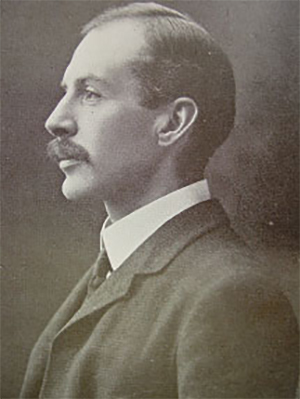
Sir John Arkwright
After the war, Arkwright returned to Presteigne, and from 1919 ‘my crossing of daffodils began seriously… I had raised a few seedlings before that but only from very antiquated varieties, and these cannot be said to count.’ One such had found its way to Arkwright’s Head Gardener in the trenches in northern France. William Bevan wrote home in April 1918: ‘We have spent a lot of our time quite near to the enemy… The [daffodil] seedling you sent seems good, I had that in my little dug out & it brought me a little nearer home for the time.’
By 1922 Arkwright was a member of the MDS, becoming vice-president in 1928 and President 1937-39 (fourteen years after Dr Lower). In 1925 he contributed the Society’s Arkwright Challenge Cup, presented for six varieties of bicolour trumpets judged for the contrast between perianth and trumpet. This indicates his main area of interest, corroborated by surviving blooms at Kinsham Court. Of those that Arkwright registered (mainly Divisions 2 and 3, Large and Small-cupped daffodils), in Division 2, ‘Kudos’, ‘Lawful’, ‘Publicity’ and ‘Skyline’ certainly show this characteristic, as do ‘Prim’ and ‘Waymark’ in Division 3. However, ‘Corgi’(Division 2, yellow perianths and corona) and ‘Meus’(ditto) do not.
Arkwright was to contribute nineteen daffodils in all to the RHS Register between 1930 and 1938 – again war seems to have intervened and he relinquished the MDS Presidency in 1939. He died in 1954. Today Kinsham belongs to his wife’s great-niece Susan Wood, and more than sixty varieties of daffodil still flower in the gardens.
The final member of the ‘Presteigne Four’ was a niece of Arkwright’s wife. Gwendolen Evelyn had lived at Kinsham Court until its sale to Arkwright, when she moved with her mother to Corton, a smaller property on the estate. Her thirteen contributions to the daffodil register were made between 1927 and 1933, and they are exclusively in Divisions 2 and 3. Four of them (all Division 2) are also apparently collaborations with Alec Wilson; ‘Caerleon’ (primrose yellow perianths, orange corona), ‘Diolite’ (primrose yellow perianths, golden yellow corona with a browning orange rim), ‘Marksman’ (brilliant yellow perianths, orange corona suffused with yellow at the base) and ‘RustomPasha’ (vivid yellow perianths, strong orange corona).
Like Wilson, Evelyn grew commercially at Corton (tulips too), and also like Wilson, her manager, Harry Hatfield, maintained the business after her death until Presteigne’s railway line closed. Susan Wood recalls staying at Corton as a small girl, when little boxes of seed were kept in a wooden chest, and the daffodils wore chaste muslin bonnets, to prevent wanton cross-pollination. Susan Wood claims that Evelyn once spent £80 on two bulbs.
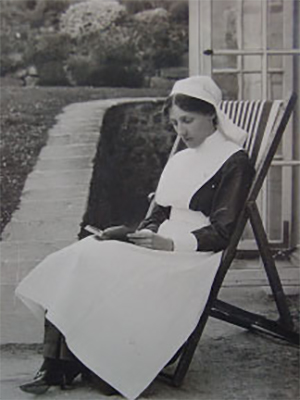
Gwendolen Evelyn at Corton
Although the least prolific of Presteigne’s four breeders, Gwendolen Evelyn provides a key connection between them. During the First World War she opened Corton, first for Belgian refugees, then from May 1915 as a Red Cross Hospital. From 1917 Corton specialised in rehabilitating amputees, and for her work Evelyn was appointed OBE. The Medical Officer for the hospital throughout was Dr Lower, and Alec Wilson received official recognition for his contributions to Corton. Arkwright was mostly in London, but his wife was a Voluntary Aid Detachment (VAD) nurse at her niece’s hospital. It seems therefore that this extraordinary flowering of enthusiasm for the narcissus was nourished by the mud of Flanders as well as the soil of Presteigne. Perhaps the gentle art of daffodil hybridising was a welcome antidote to the horrors that this generation had witnessed. However it came about, the work of these four growers has left a significant legacy to a small community far from the south-west counties that are traditionally considered the daffodil’s home.
Sources
Hereford County Archive, Arkwright Collection (A63)
The Lindley Library, Royal Horticultural Society, London
The Wellcome Library
Publications and Journals
Annual Reports of the Midland Daffodil Society
Daffodil Society Newsletter
The Daffodil and Tulip Year Book
Notes
I am grateful for the assistance of Lawrence Banks, Colin Barret, Sir Simon Gourlay, Keith Hatfield, Sally Kington, Ann Lisney, David and Winnie Preece, Marion Price, Gill Walker, and Susan Wood in the preparation of this article.
If you would like to order any of Catherine’s published books or journals please email:
Pontesbury and District Gardeners Association January Newsletter
Here are some pictures of a morning in The Trading Post
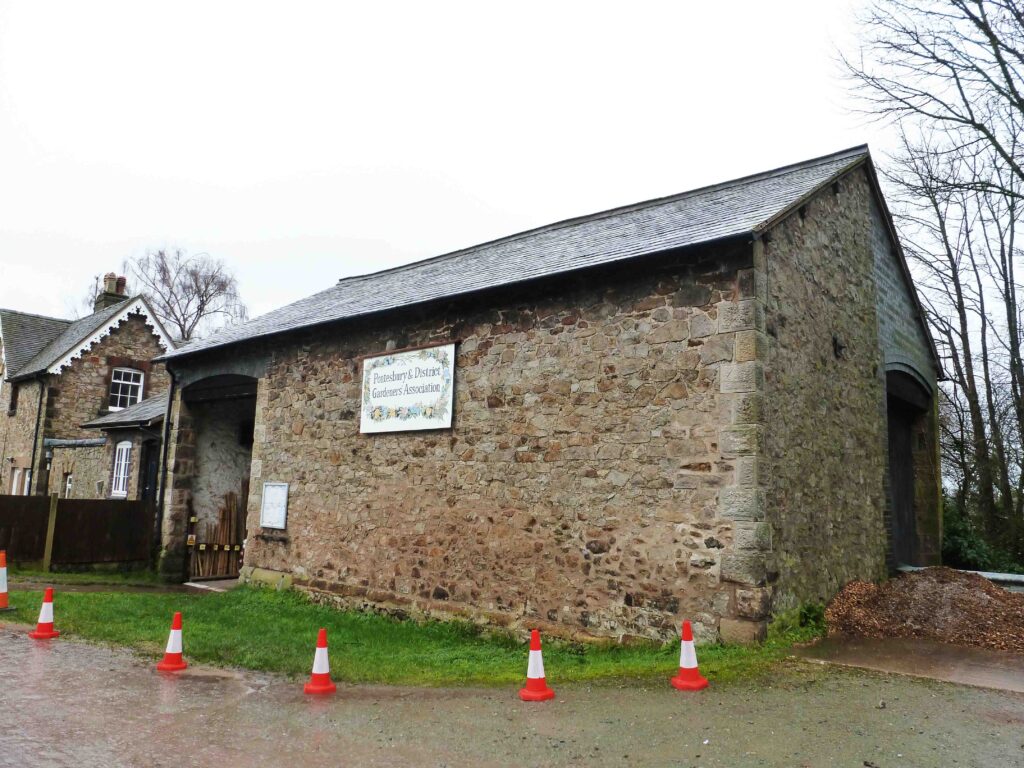
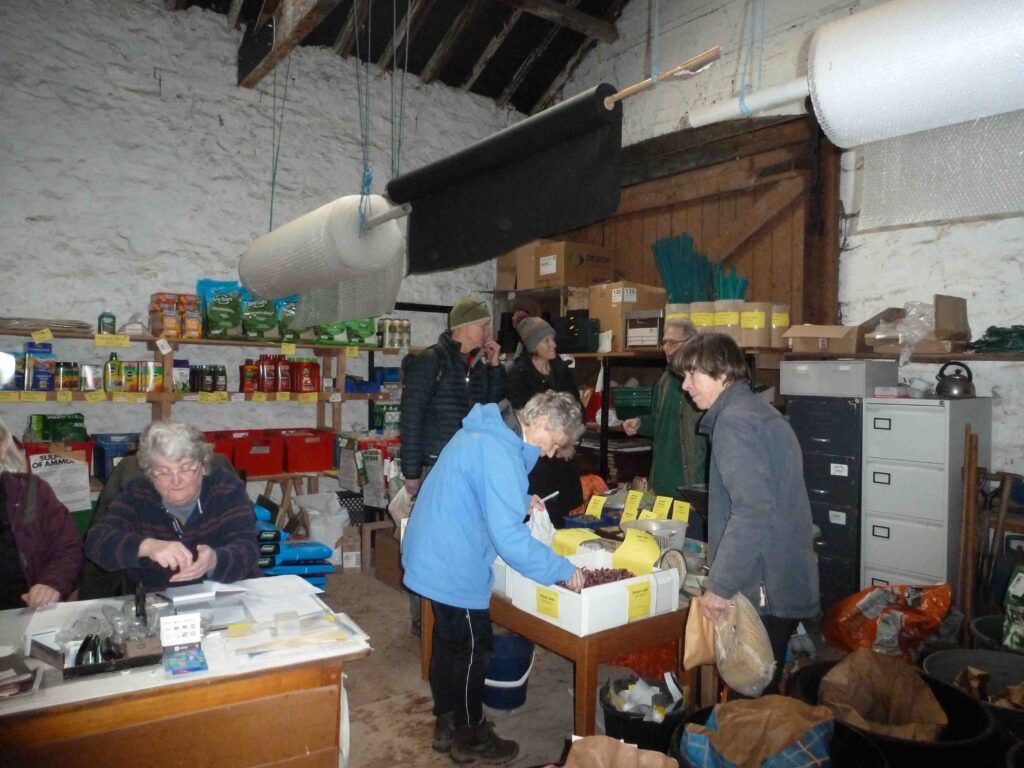
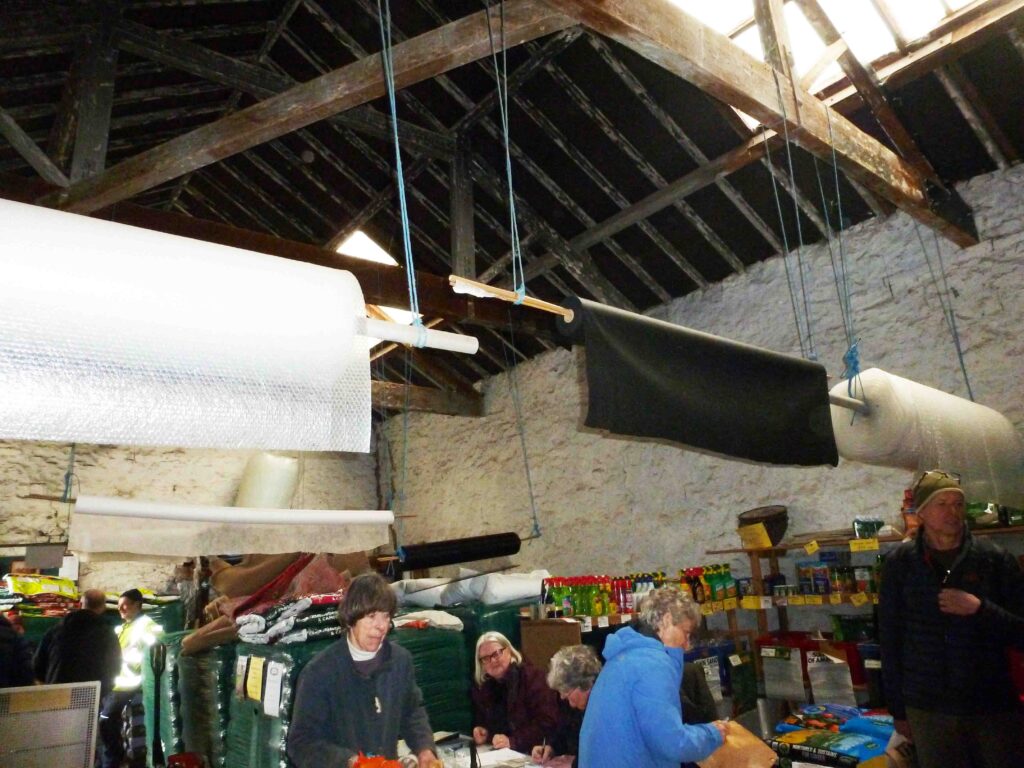
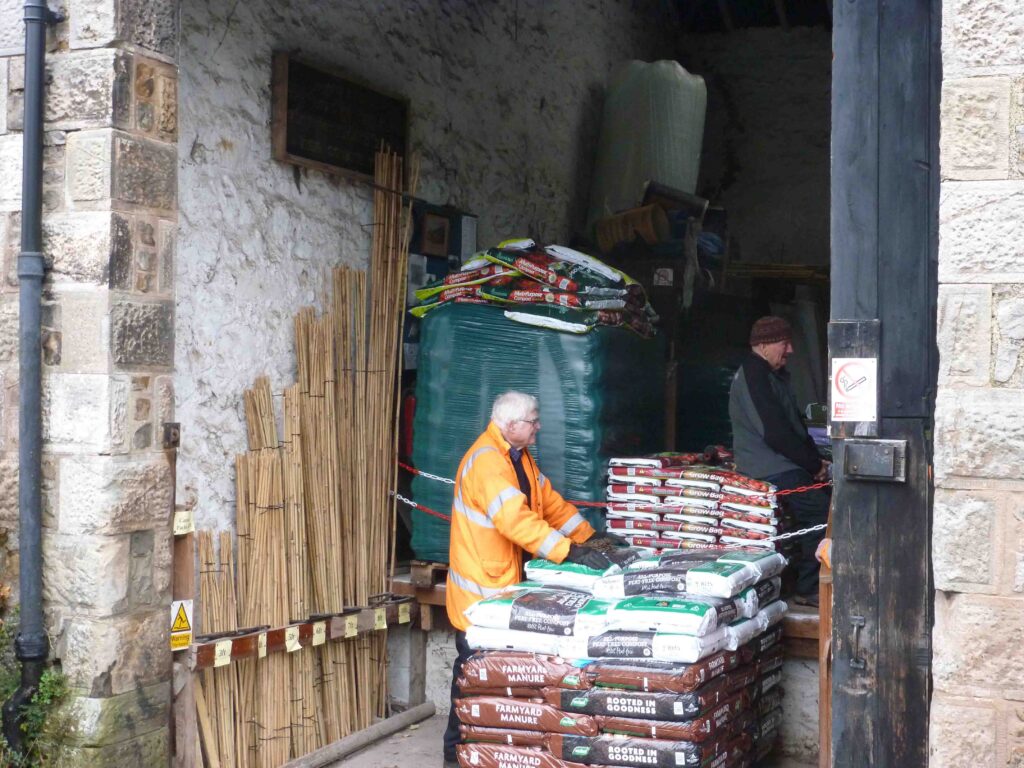
As the Station used to be The Trading Post is the building the “Pontesbury” sign is fixed to.
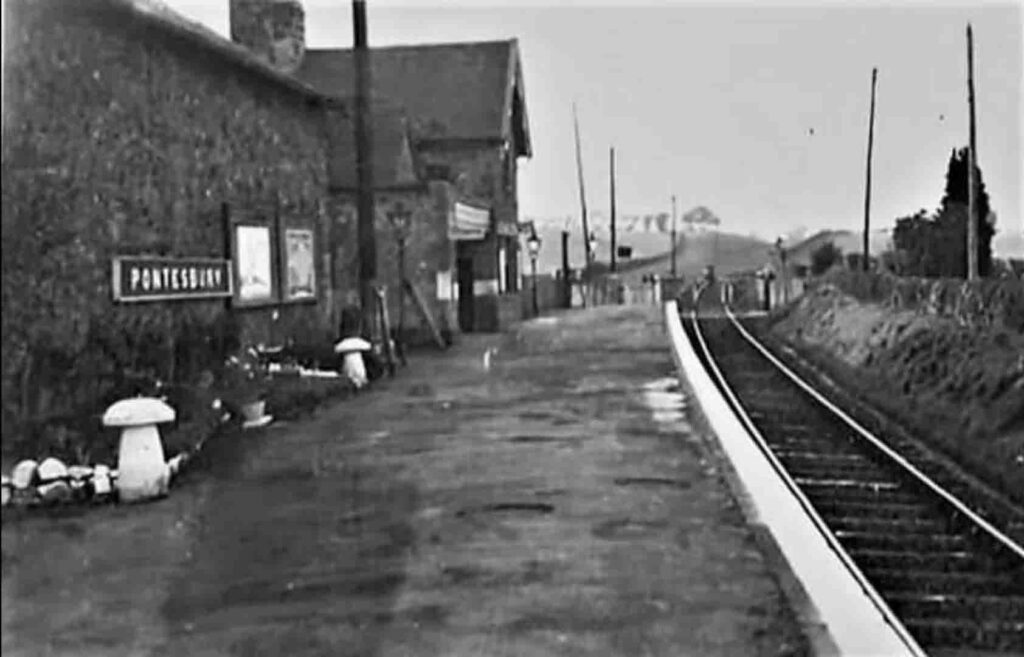
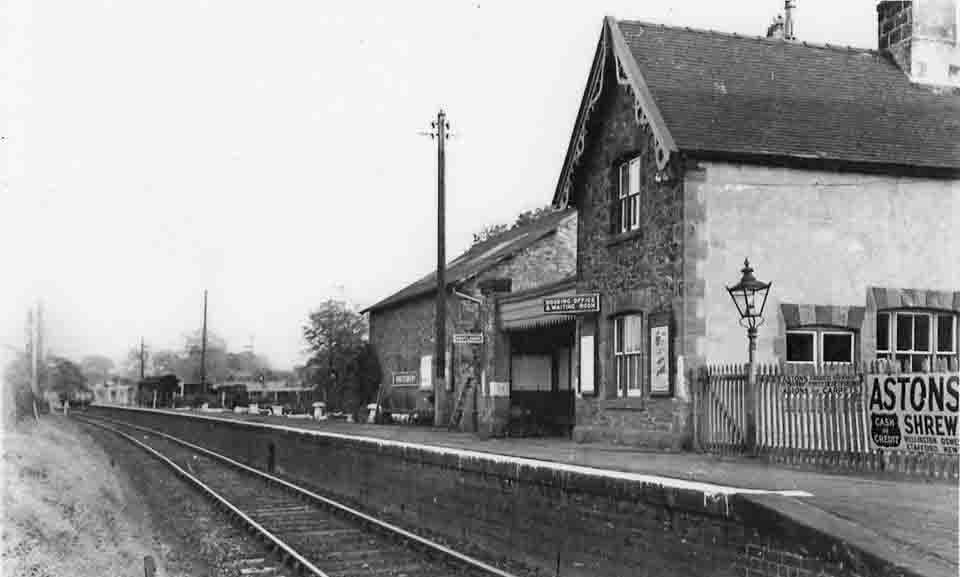
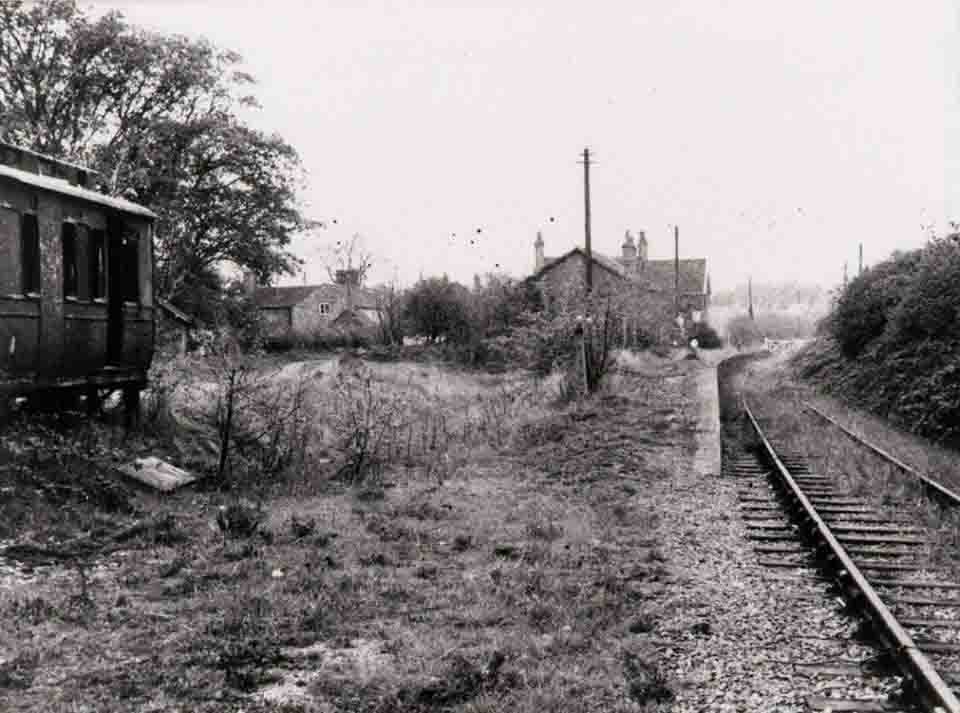
When it had become a little “neglected” The Trading Post is the building behind the telegrapgh post
The following are Shropshire Companies and should be of interest to Horticulturalists. I do not have any connection with them.

At this time of year Gardeners are looking at planting Fruit trees. I am asked many times as to what i recommend and also the rootstock. I have a couple of reccomendations which i would like to grow myself but Fruit trees are very much dependant on location soil type and preference for the people growing them.
Rootstocks are another matter and i have put together a couple of pages where i have sourced as simple information as possible to help Horticulturalists.
Here is the link.